
ECE R10 certification, explained and supported.
Vehicle EMC type approval under UN Regulation No. 10: what it covers, which tests apply, what changed with the 07 series of amendments (often called "Revision 7"), and how TESTUPS supports you with testing services, test systems and complete R10 laboratories.
This page is general information, not legal advice. Requirements change; check the official texts or the competent authority before you rely on them. Official source: UNECE vehicle regulations (WP.29).
Last reviewed: November 2026.
What is UN ECE R10?
UN Regulation No. 10 sets the electromagnetic compatibility (EMC) requirements for the type approval of road vehicles and of the electronic sub-assemblies (ESAs) fitted to them. It is one of the UN Regulations annexed to the 1958 Agreement, administered by the UNECE World Forum for Harmonization of Vehicle Regulations (WP.29).
In one sentence: R10 limits how much electromagnetic interference a vehicle or its electronics may emit, and sets how well they must withstand interference from outside, so that radios, safety systems and communications all work correctly when vehicles share the road.
50+
More than 50 Contracting Parties to the 1958 Agreement; each decides which UN Regulations it applies.
07 series
The 07 series of amendments (often called "Revision 7"), in force since 12 June 2025, with a parallel period until 1 September 2029.
Vehicles + ESAs
Whole vehicles and the electronic sub-assemblies intended to be fitted to them.
E mark
The approval mark: the letter E in a circle with the number of the approving country.
Scope: who and what R10 applies to
R10 applies to vehicles of categories L, M, N, O, T, R and S, and to ESAs intended for them: control units, sensors, actuators, lighting electronics, infotainment, chargers and aftermarket electronics.
- Vehicle manufacturers (OEMs) of all categories
- Suppliers of electronic components such as ECUs, sensors and on-board chargers
- Test laboratories running EMC tests for approvals
- Importers and exporters of vehicles and parts
- Homologation, quality and conformity-of-production (COP) teams
| Category | Vehicles |
|---|---|
| L1–L7 | Mopeds, motorcycles, tricycles and quadricycles |
| M1 | Passenger cars, up to 8 seats plus the driver |
| M2 / M3 | Buses and coaches up to / over 5,000 kg |
| N1 / N2 / N3 | Goods vehicles up to 3.5 t / 3.5–12 t / over 12 t |
| O1–O4 | Trailers, from up to 0.75 t to over 10 t |
| T, R, S | Agricultural and forestry tractors, their trailers and towed equipment |
R10 tests: vehicle level and ESA level
R10 tests answer two questions: what does the vehicle or component emit, and what can it withstand? The methods come from international standards that the regulation references.
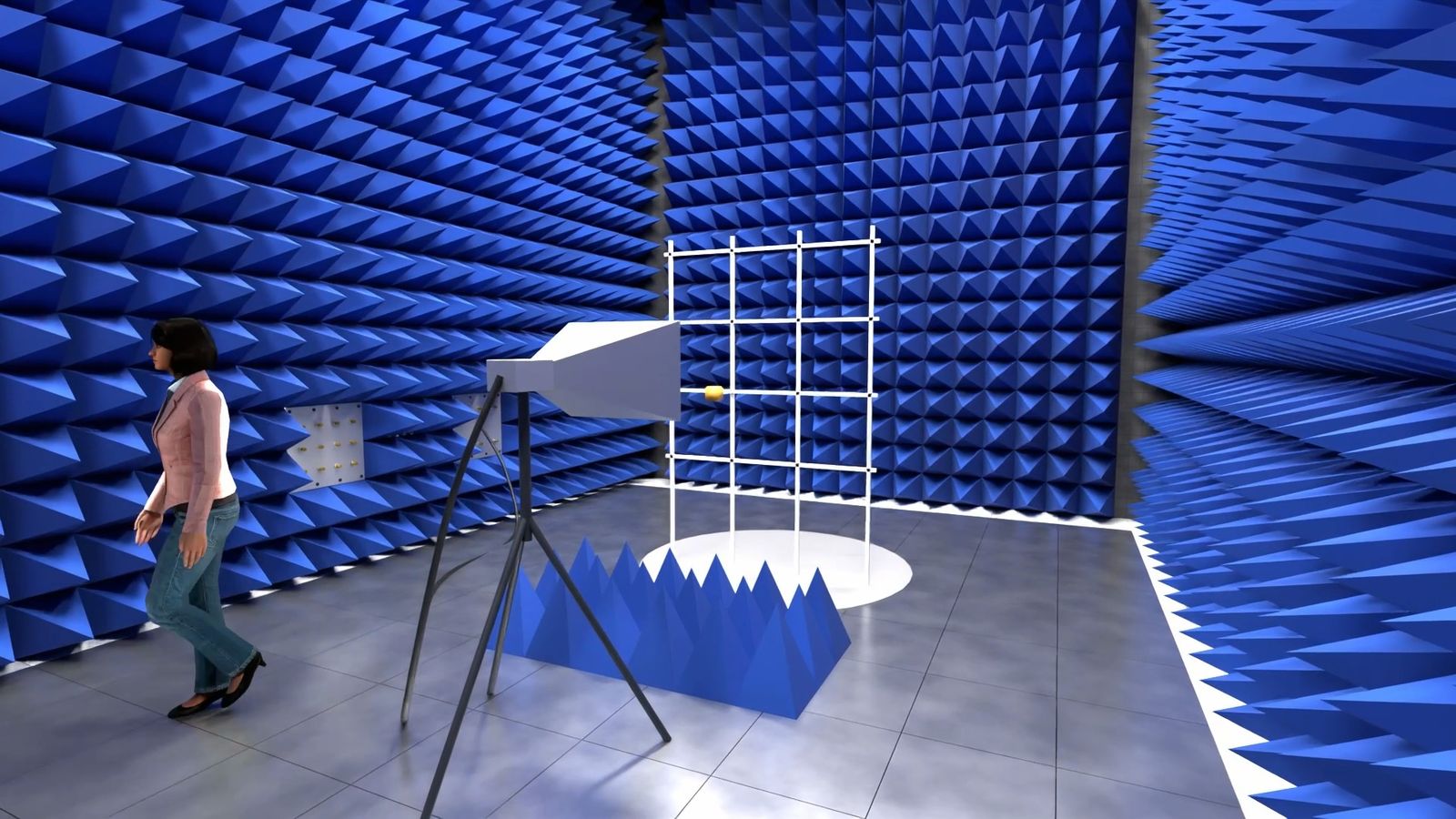
Vehicle-level tests
| Test | Typical method |
|---|---|
| Broadband radiated emissions | CISPR 12 method, engine running, on an outdoor test site or in an absorber-lined shielded enclosure (ALSE) |
| Narrowband radiated emissions | CISPR 12 or CISPR 25 method, ignition on, engine off |
| Radiated immunity | ISO 11451-2, absorber-lined shielded enclosure (ALSE); up to 6 GHz in the 07 series |
| Bulk current injection (alternative method) | ISO 11451-4, 60 mA (over 90 %) / minimum 50 mA |
| Vehicles in charging mode (REESS connected to the grid) | Harmonics and flicker (IEC 61000-3 parts), RF conducted emissions on power lines, immunity to fast transients/burst (IEC 61000-4-4) and surges (IEC 61000-4-5) |
ESA (component) tests
| Test | Typical method |
|---|---|
| Radiated emissions | CISPR 25, ALSE with ground-plane bench |
| Conducted transient emissions on supply lines | ISO 7637-2 |
| Radiated immunity | ISO 11452-2 (ALSE), ISO 11452-3 (TEM cell), ISO 11452-4 (bulk current injection), ISO 11452-5 (stripline), and ISO 11452-11 reverberation chamber (newly permitted in the 07 series) |
| Immunity to supply-line transients | ISO 7637-2 pulses 1, 2a, 2b, 3a/3b and 4 (07 series: pulse 4 only for ESAs that could be fitted to vehicles with an internal-combustion engine started by a 12/24 V starter) |
| ESAs in charging mode | Harmonics, flicker, conducted RF emissions, burst and surge immunity (IEC 61000-3 and IEC 61000-4 parts) |

Revision 7 (07 series): what changed
The 07 series of amendments entered into force on 12 June 2025. It is the biggest change to vehicle EMC rules in over a decade.
| Topic | 06 series (Rev. 6) | 07 series (Rev. 7) |
|---|---|---|
| Vehicle immunity frequency range | 20 MHz – 2 GHz: 30 V/m (over 90 % of the band), minimum 25 V/m | 20 MHz – 6 GHz (free-field ALSE method): same levels to 2 GHz, plus 10 V/m (over 90 %) / minimum 8 V/m from 2 to 6 GHz |
| EV charging emissions | One set of limits | Residential (IEC 61000-6-3) and non-residential (IEC 61000-6-4) limits: more permissive limits apply in non-residential charging locations |
| Automated driving systems | No specific requirement | The system must remain in a failure-safe or expected failure operating mode during immunity testing, with a log in the test report |
| Emergency call (eCall / AECS) | Not tested in R10 | Over-the-air test before, during and after immunity testing, including data and voice |
| Reverberation chamber for ESAs | Not a permitted ESA method | ISO 11452-11 newly permitted: 21 V/m (90 %) / 18 V/m (minimum) at 20 MHz – 2 GHz; 7 / 6 V/m at 2–6 GHz |
| Long vehicles (over 12 m long, 2.6 m wide or 4 m high) | Qualitative antenna positions | A formula sets the number of antenna positions |
| Conducted RF emissions on wired network ports (charging mode, vehicles and ESAs) | Required | Deleted |
Key dates
- 12 June 2025: 07 series in force. Contracting Parties may not refuse approvals issued under it.
- Until 1 September 2029: parallel period. 06-series approvals can still be granted and extended.
- From 1 September 2029: Contracting Parties are not required to accept new approvals under earlier series. New vehicle and ESA types need the 07 series.
- After that: existing approvals remain valid and can still be extended.
Free guides by TESTUPS: the UN ECE R10 Update Guide (51 changes, 19 pages) and the ECE R10 Certification Guide.
Type approval and the E mark: step by step
- Scope and test plan: define the vehicle or ESA type, its functions, operating modes and the applicable tests and series of amendments.
- Pre-compliance: measure early, find the weak points and fix them before the formal test.
- Formal testing: tests by, or witnessed by, a technical service designated by an approval authority.
- Application and approval: the manufacturer applies; the approval authority of a Contracting Party grants the approval and the approval number.
- Marking: the approval mark, the letter E in a circle with the country number, plus the approval number.
- Conformity of production: production must keep matching the approved type. In the 07 series, the method used at approval applies to COP checks.
TESTUPS is not an approval authority or a technical service. We support every step up to and around the approval.
R10 services from TESTUPS
From test planning to E-mark approval, TESTUPS supports automotive manufacturers and suppliers with EMC testing services, test systems and certification support.
- R10 test planning: scope, operating modes, monitoring, and the 06 / 07 series decision
- Pre-compliance testing and EMC debugging before the formal test
- EMC testing services for vehicles and ESAs
- Certification support for the type-approval file and the dialogue with the technical service
- Revision 7 gap analysis for existing products and approvals
- Training for engineering and homologation teams
R10 test systems
TESTUPS designs, sources and supplies complete test systems for the R10 methods, for labs that test vehicles, components or both.
Emissions
CISPR 25 and CISPR 12 radiated-emission systems: EMI receivers, antennas, artificial networks, turntables and antenna masts.
Radiated immunity
ALSE systems to ISO 11451-2 and ISO 11452-2 up to 6 GHz, with amplifiers, field-generating antennas and field probes.
Conducted immunity
Bulk current injection (ISO 11452-4), stripline (ISO 11452-5) and TEM cell (ISO 11452-3) set-ups.
Transients
ISO 7637-2 pulse generators (1, 2a, 2b, 3a, 3b, 4), plus burst and surge generators (IEC 61000-4-4, -4-5) for charging-mode tests.
EV charging
Harmonics, flicker and conducted-emission set-ups for vehicles and ESAs in charging mode.
Software
Test software that runs the sequence, applies corrections and produces the report.
More: Automotive EMC test systems · Transient immunity test systems
R10 laboratories
For manufacturers, suppliers and test houses that want to run R10 tests in-house, TESTUPS designs and supplies complete laboratories, from component labs to vehicle chambers.
- ESA (component) lab: CISPR 25 chamber with ground-plane bench, immunity and transient systems
- Regular vehicle EMC chamber: for L, M1, N1 and small trailers, vehicles up to about 6 m, with turntable and chassis dynamometer or roller bench
- Long vehicle EMC chamber: for buses, trucks, heavy trailers and tractors with implements, 12–20+ m, with multi-axle dynamometer and oversized door
- Control room, amplifier room and shielded rooms around the chamber
- Installation, site validation support and accreditation support for labs preparing for ISO/IEC 17025

More: Vehicle EMC anechoic chambers · Turnkey EMC labs
R10 FAQ
Does my product need UN ECE R10 approval?
If it is a road vehicle of category L, M, N, O, T, R or S, or an electronic sub-assembly (ESA) intended to be fitted to one, R10 is the EMC regulation that applies in the countries that use UN Regulation No. 10 for type approval. Whether a separate ESA approval is needed depends on the component and on how the vehicle manufacturer handles approval; check the regulation text and ask your approval authority or technical service.
Who issues the R10 approval?
The approval authority of a Contracting Party to the 1958 Agreement, on the basis of tests carried out or witnessed by a designated technical service. TESTUPS is neither; we support you with test planning, pre-compliance, testing services and test equipment.
What is the E mark?
The approval mark under UN Regulations: a circle containing the letter E and the number of the country that granted the approval, followed by the approval number. It shows that the vehicle or ESA type was approved to the regulation.
What is the difference between the 06 and 07 series?
The 07 series (Revision 7) entered into force on 12 June 2025. It extends vehicle immunity testing from 2 GHz up to 6 GHz, splits EV charging emission limits into residential and non-residential, adds requirements for automated driving and emergency-call systems, gives numeric levels for reverberation-chamber ESA testing and deletes the conducted RF emission requirement on wired network ports in charging mode.
Are my existing 06-series approvals still valid?
Yes. Existing approvals remain valid and can still be extended. From 1 September 2029, Contracting Parties are not required to accept new type approvals issued under any series earlier than the 07 series, so new vehicle and ESA types need the 07 series from then on.
Which standards does R10 use?
Mainly CISPR 12 and CISPR 25 for emissions, the ISO 11451 (vehicle) and ISO 11452 (component) series for immunity, ISO 7637-2 for supply-line transients, and IEC 61000-3 and IEC 61000-4 parts for vehicles and ESAs in charging mode connected to the grid.
Can R10 tests be done in my own lab?
Approval tests are carried out by, or witnessed by, the technical service. Many manufacturers run the same tests in their own lab for development and pre-compliance, and some labs work with their technical service so that tests in their facility can be witnessed. The lab needs the right chamber, test systems and calibration for that.
How long does an R10 project take?
It depends on the product, on how ready it is and on lab availability. A pre-compliance round before the formal test is the most reliable way to avoid repeat tests.
Talk to an R10 engineer
Tell us about your vehicle or component, the market and your timeline. We reply with a test plan or a lab proposal.
Names of regulations, standards and organisations are used only to identify them. TESTUPS is not affiliated with UNECE, any approval authority or technical service.